
At a glance
Toilet training is easier when the right place is easy to reach and success is rewarded immediately. Treat accidents as information about timing, supervision, or access—not as disobedience.
- Choose one clear toilet area
- Offer chances around predictable transitions
- Record only what helps the next decision
- Respond to accidents calmly
Choose one clear toilet area
Take your puppy to the same suitable area through the same route where practical. Keep the first minutes quiet so the task is clear, then reward promptly after they finish.
Offer chances around predictable transitions
Start with opportunities after waking, meals, drinking, energetic play, training, and before sleep. Individual needs vary with age, health, diet, and routine; veterinary advice outranks a fixed internet timetable.
- Supervise closely when awake.
- Use a safe, appropriately sized rest area when direct supervision is impossible.
Record only what helps the next decision
For several days, note the event before each success or accident. A repeated cluster tells you when to offer the next chance earlier; it is not a score for the puppy.
Respond to accidents calmly
Interrupt only if you can do so without frightening the puppy, guide them to the right place, and clean thoroughly. Punishment after the event cannot teach the desired location and can make toileting near people harder.
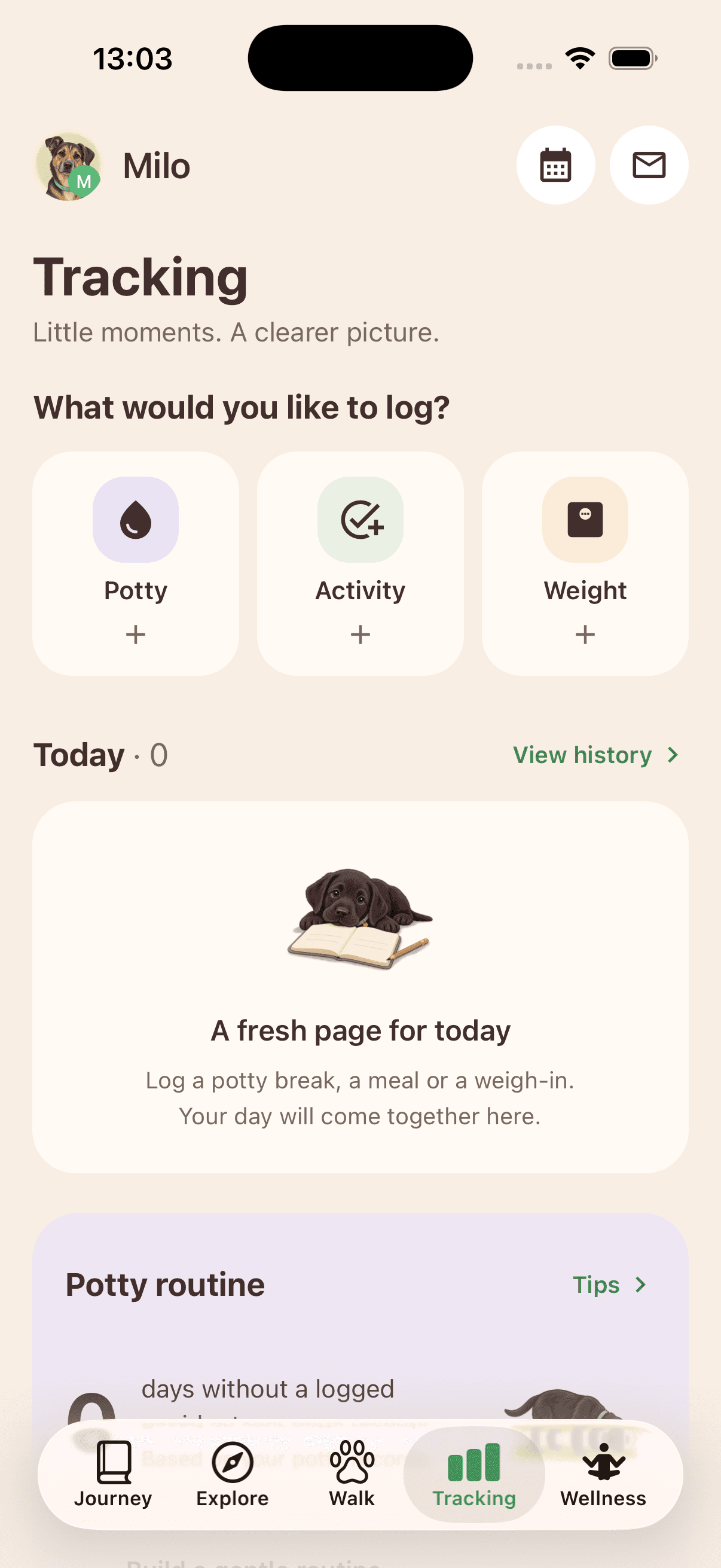
Use Pupwell as a pattern notebook
Where available in your plan, log relevant potty or care events and set reminders for repeatable opportunities. Review the pattern weekly rather than chasing a perfect streak.
- Tracking and some learning features may require a subscription.
- Pupwell does not diagnose urinary, digestive, or behavior problems.
Sources and further reading
- VCA Animal Hospitals: House Training for Puppies and Dogs
- Blue Cross: Puppy toilet training
- AVSAB: Humane Dog Training Position Statement
Updated: